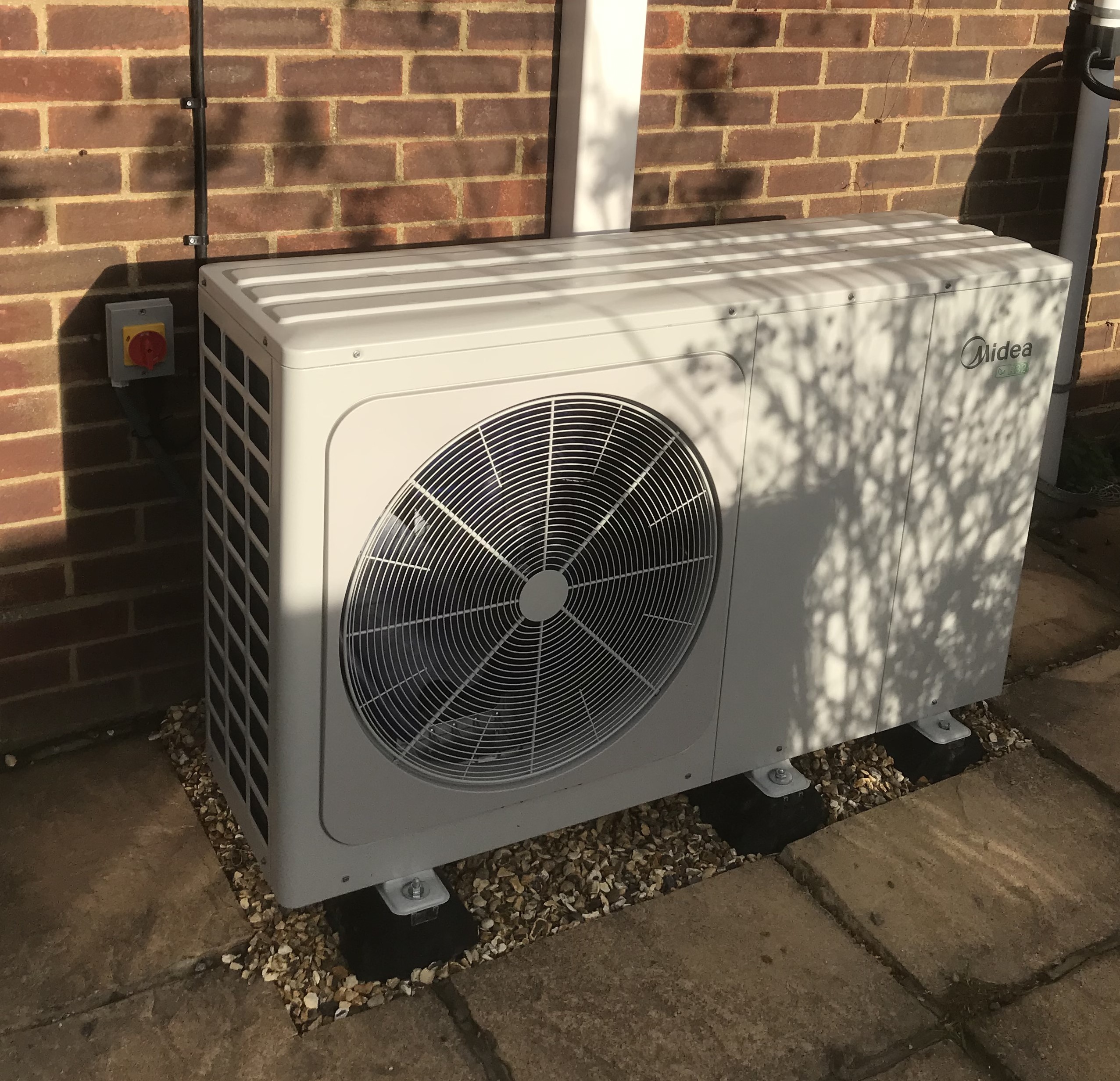
An air source heat pump is a device that can extract ambient heat from outside air and transform it into warm air or water that’s piped indoors. Heat pumps are growing in popularity because they offer low-carbon heating combined with energy efficiency for lower bills.
In this article, we explore how air source heat pumps work, the benefits of using them, whether they’re right for your home, and how to choose one. Here’s air source heat pumps explained:
How Does an Air Source Heat Pump Work?
So, how does an air source heat pump work?
At a basic level, air source heat pumps work by taking warmth from the ambient outside air and transferring it indoors using a reverse refrigeration cycle.
The process starts with a fan that draws air from the outside over an evaporation coil. This process heats refrigerant, which compressors then turn into a gas to heat air or water for radiators and underfloor heating.
What’s amazing about air source heat pumps is that they can work at temperatures as low as -20°C. They work a bit like your fridge but in reverse. Units cool the outside air to warm the inside air.
What’s great about air source heat pumps is how they operate year-round. They can continue performing even during exceptionally cold weather in the winter.
Air Source Heat Pump Benefits
Air source heat pump benefits are considerable. Here’s a rundown of what you can expect if you install a unit on your property:
- Lower running costs. Air source heat pumps have a lower running cost compared to traditional heating. Most homeowners can achieve a 50% saving on their heating bills once they have systems installed.
- Reduced carbon emissions. Air source heat pumps produce less CO2 because they are more efficient.
- Efficiency. Most air source heat pumps operate in the 300 to 400% efficiency range, which is considerably higher than gas boilers, which operate in the 90 to 95% range.
- Long lifespan and low maintenance. Air source heat pumps can last between 15 and 20 years. Some estimates suggest that they may be able to last longer with proper maintenance, much longer than traditional gas boilers, which usually survive 10 to 15 years.
- Suitable for underfloor heating and modern radiators. Modern air source heat pumps are highly versatile and can accommodate sophisticated home heating and water boiling systems.
Is an Air Source Heat Pump Right for Your Home?
Of course, whether an air source heat pump is right for your home is an open question. In general, we recommend units for well-insulated homes. If your home is not well insulated, heat will escape rapidly, and your air source heat pump will seem ineffective.
Because of this, air source heat pumps work best for new builds and retrofits. Systems are ideal for properties that have recently been renovated or upgraded.
Before ordering an air source heat pump, make sure you have the space outside for the outdoor unit. You’ll need an external area, perhaps in a service alleyway, that provides enough space for the equipment. This may require you to consider planning, such as whether you have sufficient area on your land.
Choosing an Air Source Heat Pump Installer
When choosing an air source heat pump installer, we recommend doing the following:
- Look for an installer offering warranties
- Check their efficiency and compliance
- Ensure they can offer you the correct sizing and design
- Check that they are an MCS accredited qualified installer
Doing your homework early on can save you hassle later. For reliable installers, get in touch with our team here at Ashwood Solar.
FAQs
Do air source heat pumps work in cold weather?
Yes, air source heat pumps can continue to work in cold weather down to temperatures as low as -20°C.
Are they expensive to run?
No, because of the underlying technology, air source heat pumps are not expensive to run. In fact, they are often 3-4 times more efficient than gas boilers.
How long do air source heat pumps last?
Air-source heat pumps can last 15 to 20 years with standard use. However, some experts believe that homeowners may be able to extend their life beyond this with careful maintenance.
Can they replace a gas boiler?
An air source heat pump can fully replace a gas boiler. Air source heat pumps can heat both air and liquid in your home for central heating.
Do I need a specialist installer?
It’s always a good idea to use a specialist installer for your air source heat pump to avoid disappointment. It’s recommended you choose an accredited installer like Ashwood Solar.
Conclusion
Ultimately, air source heat pumps are the state-of-the-art heating solution for 21st century homeowners. They are more efficient than boilers and can lower your bills while operating consistently year-round.
If you’re interested in a heat pump for your property, schedule a consultation with a professional installer today.

